How to Choose the Right Packaging Equipment for Your Business?
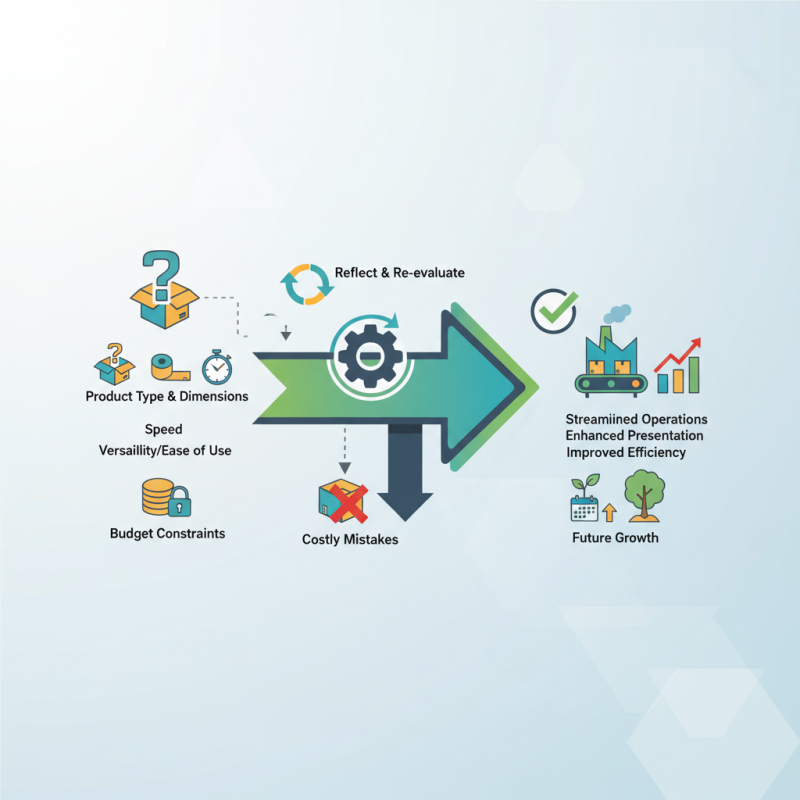
Choosing the right packaging equipment is essential for any business involved in product distribution. The right equipment can streamline operations, enhance product presentation, and improve overall efficiency. Yet, selecting the ideal machinery can be overwhelming. There are numerous options available, each with different features.
It's important to consider your specific needs. Think about the types of products you package and their dimensions. Some businesses may require machines that handle high speeds, while others might prioritize versatility or ease of use. Additionally, budget constraints play a vital role in the decision-making process. Finding quality equipment without overspending can be a delicate balance.
Mistakes can happen during this process. Overlooking essential details can lead to poor choices. Investing in equipment that doesn't suit your production volume is costly. Reflecting on these aspects will guide you toward better decisions. The right packaging equipment should be a perfect fit for the present and future of your business.
Identify Your Packaging Needs and Requirements
Choosing the right packaging equipment starts with a clear understanding of your needs. Analyze your product dimensions, weight, and fragility. Consider how your items interact with their packaging. For instance, some products may require cushioning, while others might need ventilation. Identify the volume of items you'll be packaging daily. High-output products have different needs than low-output ones.
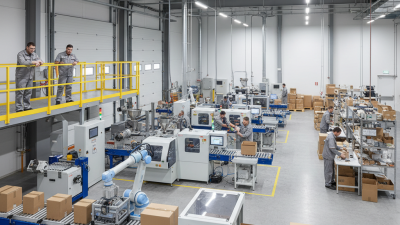
Think about the environment where the packaging will be done. Will it be in a busy factory or a quiet workshop? The pace can affect equipment choice. Reflect on the future; are you planning to expand? Investing in scalable equipment might save money later. Discuss with your team to gather insights. They can provide valuable perspectives based on real-world experiences.
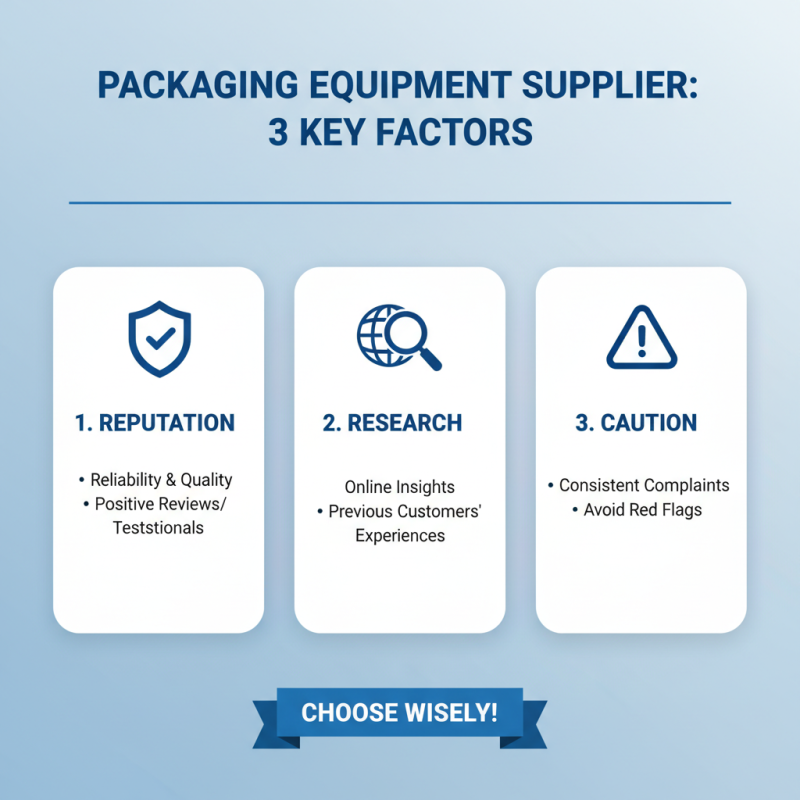
Every business is unique. Don't rush into decisions. Take time to test equipment options. What works for one product may not work for another. Seek input from suppliers about their strengths. Equipment might look advanced but doesn’t guarantee performance. Engage in discussions about maintenance and support, as these can impact long-term satisfaction.
Evaluate Different Types of Packaging Equipment Available
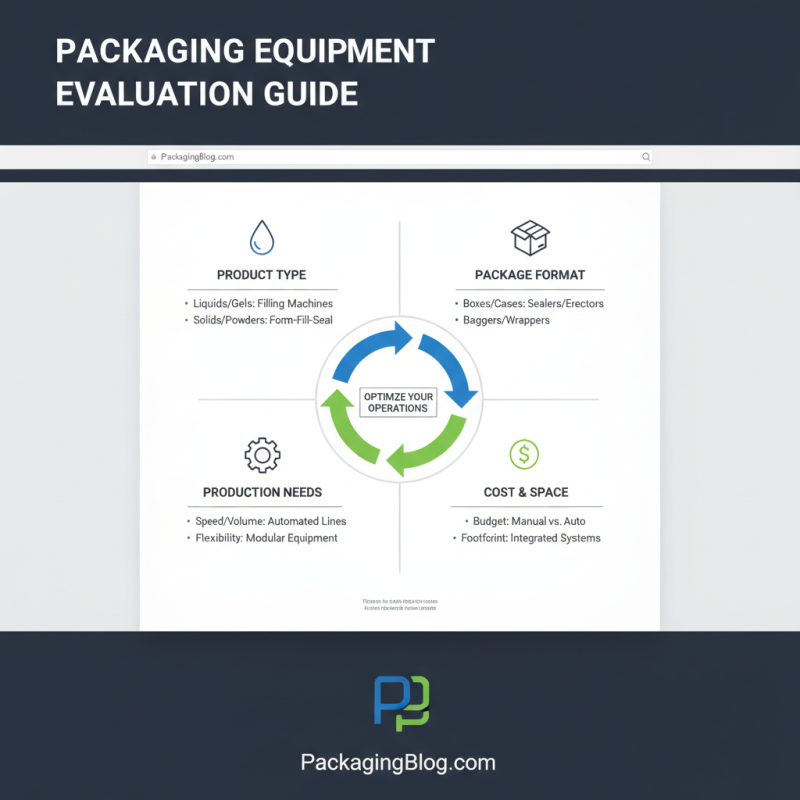
When evaluating different types of packaging equipment, it’s essential to consider various factors. Each type of equipment has its unique features and functions. For instance, filling machines might suit liquid products, while case sealers are ideal for boxed goods. Understanding your product type helps narrow down choices.
In addition, consider the production scale. If your business is small, a semi-automatic machine may suffice. For larger operations, fully automated machines can increase efficiency. However, they require substantial investment. Is the return on investment justifiable?
It’s also important to assess the flexibility of the equipment. Will it adapt to different products or package sizes? Many businesses find themselves constrained by their equipment choices. This limits innovation and growth. Remember, the right machine should balance productivity and versatility to meet evolving needs.
Consider the Size and Scale of Your Production
When selecting packaging equipment, consider your production size and scale. A small business won't need the same capabilities as a large scale manufacturer. Assess your daily output. Are you producing hundreds or thousands of units? This will guide your decision.
For smaller operations, a semi-automatic machine may suffice. It offers flexibility and can handle varied products. However, as demands grow, an upgrade to fully automatic systems might be necessary. You might find your current setup limiting as orders increase. This is a common oversight.
Space is another critical factor. A larger machine may look impressive, but does it fit in your production area? Accurately measuring your workspace ensures your equipment aligns with your operations. Regularly review your needs as your business evolves, and be open to adjusting your approach.
How to Choose the Right Packaging Equipment for Your Business? - Consider the Size and Scale of Your Production
| Production Size |
Equipment Type |
Speed (Units per Minute) |
Typical Usage |
Cost Range |
| Small Scale (up to 500 units/day) |
Manual Packing Station |
5-10 |
Small businesses, artisanal products |
$1,000 - $5,000 |
| Medium Scale (500 to 5,000 units/day) |
Semi-Automatic Wrapper |
15-30 |
Reducing labor costs, small factories |
$5,000 - $20,000 |
| Large Scale (5,000 to 50,000 units/day) |
Fully Automatic Packaging Line |
50-100 |
High-volume production, large factories |
$20,000 - $100,000+ |
| Custom Scale (>50,000 units/day) |
Custom Automated Solutions |
100+ |
Specialized industries, unique requirements |
$100,000+ |
Assess Budget Constraints and Return on Investment
When selecting packaging equipment, it's crucial to assess your budget constraints. A report by the Freedonia Group indicates that the global packaging machinery market is expected to reach $47 billion by 2024. However, not every business can bear such large investments. Understanding your financial limitations will help narrow down options.
Calculating the return on investment (ROI) is also vital. A study published by PMMI shows that businesses typically recover equipment costs within three years. This can make higher initial costs worthwhile. However, if ROI projections are unrealistic, reevaluating your choices is essential. Investing in the wrong technology can lead to wasted resources and missed opportunities.
It’s important to consider not just the purchase price. Training, maintenance, and operation costs add up. For instance, specialized machines may require skilled operatives, which can inflate ongoing expenses. The need for flexibility in your equipment is also key in adapting to market changes. A rigid system might lead to future regrets. Instead, think long-term. Balancing cost and functionality is a delicate dance that requires careful thought.