
Choosing among the Top China Modular Trade Show Booth Manufacturers requires more than comparing prices or browsing attractive photographs. A strong supplier should understand visitor flow, brand storytelling, structural safety, and practical installation needs. The best Modular Trade Show Booth is not simply a collection of aluminum frames and printed graphics. It should guide visitors naturally, create a clear first impression, and support real conversations beside a product display.
Marketing authority Seth Godin writes, “People do not buy goods and services. They buy relations, stories, and magic.” That idea matters on a busy exhibition floor. A carefully planned booth can turn a ten-second glance into a meaningful discussion. Consider the details: illuminated logos, concealed storage, clean cable management, reusable counters, and graphics readable from several meters away. These features influence how professional and trustworthy a company appears.
Chinese manufacturers often provide valuable advantages, including scalable production, custom engineering, and export experience. However, quality is not automatic. Buyers should examine material specifications, fire-safety documentation, installation drawings, sample workmanship, and communication procedures. Ask for photographs from completed projects, not only polished renderings. Request a realistic timeline. Small oversights can become expensive at the venue.
No supplier is perfect. Neither is every design brief. A modular system may look impressive yet feel cold, crowded, or difficult to assemble. This guide evaluates leading manufacturers through practical experience, design capability, production reliability, customization, logistics support, and after-sales service. The goal is not to praise the biggest name. It is to identify partners that can deliver a dependable booth and improve the exhibition experience, even when the project changes at the last minute.
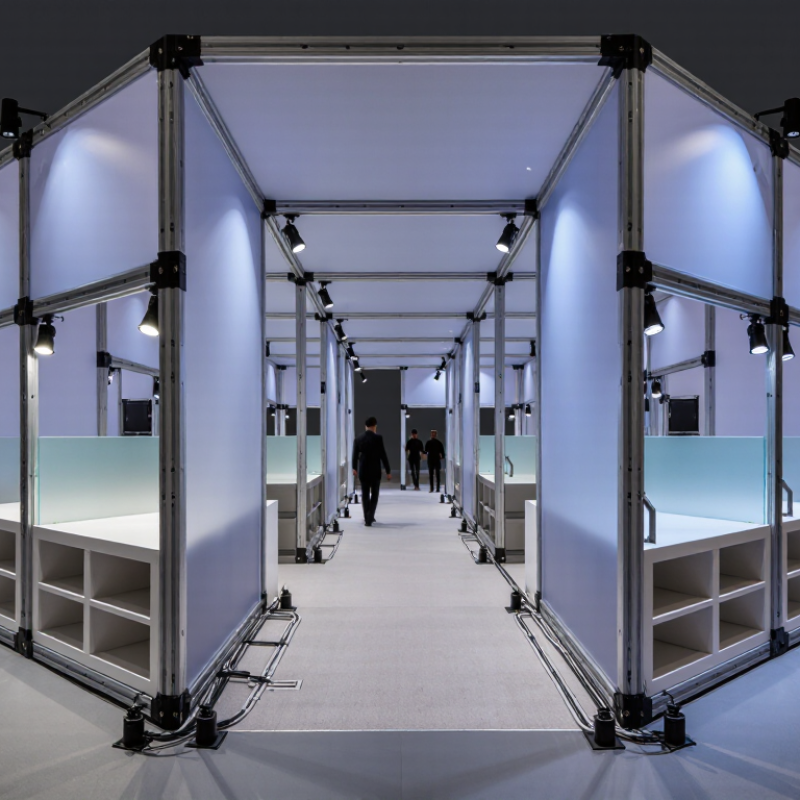
Modular trade show booths are reusable exhibit systems built from interchangeable parts. Their usual structure includes lightweight aluminum frames, fabric or rigid graphics, counters, shelves, lighting, and monitor mounts. Instead of constructing a new stand for every event, exhibitors can rearrange these components for different floor plans.
That flexibility matters in a busy exhibition hall. A 3-by-3-meter booth may use one back wall, two illuminated panels, and a small counter. A larger space can add meeting rooms or product shelves. Tool-free connectors often speed assembly, while flat-pack cases can reduce storage and transport demands. However, “modular” does not automatically mean simple. Poorly measured graphics, unstable flooring, or weak lighting can make a reusable booth look temporary.
Industry data supports continued investment in face-to-face exhibitions. The Center for Exhibition Industry Research estimated that U.S. business-to-business exhibitions generated about 97.3 billion dollars in direct spending in 2022. UFI’s 2024 Global Exhibition Barometer also reported broad recovery in exhibition activity across major markets. These figures suggest that adaptable booth systems can serve repeated campaigns, not just one event. Still, the design must reflect visitor behavior. A beautiful wall cannot replace clear circulation, visible staff, and a practical conversation area. Many modular displays still overlook this human detail.
China’s top modular trade show booth manufacturers combine practical design with controlled production. Their teams usually begin with visitor flow, product placement, lighting, and venue rules. This prevents attractive displays from becoming difficult to use. Experienced engineers also check panel tolerances, cable routes, load limits, and installation time before production. Small errors matter.
A strong manufacturer offers modular frames, reusable graphics, adjustable counters, and tool-free connections. These features help exhibitors adapt one booth for different floor sizes and events. Clear drawings, material samples, and a realistic cost breakdown improve reliability.
Factory inspections and documented quality checks can reveal scratched panels, weak joints, or color differences before shipment. Not every proposal is perfect. Careful review remains necessary.
Professional project management is another key feature. A dedicated coordinator should track artwork approval, production milestones, packing lists, and on-site assembly. Responsive communication helps resolve changes without creating confusion. Leading manufacturers also understand fire safety, accessibility, electrical requirements, and venue regulations in international markets. Recyclable materials and reusable structures can reduce waste, although greener options may require more planning and careful budget decisions. The best results come from manufacturers that welcome questions, admit limitations, and improve details through real exhibition experience.
Top China Modular Trade Show Booth Manufacturers
How to Evaluate Booth Design and Manufacturing Quality
A strong modular booth begins with measurable requirements, not an attractive computer rendering. CEIR’s 2023 U.S. B2B Exhibition Industry Census estimated $97.3 billion in direct exhibition spending in 2022. That scale raises the cost of poor construction. Ask manufacturers for structural drawings, load limits, material specifications, and documented installation procedures. Check whether aluminum profiles align cleanly, panels sit flush, and connectors remain stable after repeated assembly.
Design quality should support visitor movement. Aisles must feel open, product lighting should avoid glare, and graphics should remain readable from several metres away. ISO 9001-based quality procedures can help, but certificates alone prove little. Request a factory inspection or a recorded pre-shipment test. Measure booth dimensions, electrical routing, edge protection, packaging, and replacement-part availability. UFI’s Global Exhibition Barometer repeatedly identifies cost control and operational reliability as major industry pressures, making reusable components commercially important.
I have seen polished renders conceal weak hinges and thin graphic panels. That mistake is expensive. A practical review should include one complete mock assembly before shipping. Test doors, counters, shelves, lighting, and cable access. Leave room for revision; even experienced teams miss small ergonomic problems. A reliable manufacturer accepts criticism, records corrective actions, and provides clear tolerances instead of promising perfection.
Use this weighted evaluation framework to compare modular exhibition booth proposals. The criteria cover both design performance and manufacturing quality, with a total evaluation weight of 100%.
Structural safety, design adaptability, material finish, and graphic clarity should receive the highest attention because they directly influence visitor experience, brand presentation, installation reliability, and booth reuse.
Top China Modular Trade Show Booth Manufacturers
China’s modular booth sector now competes through production control, customization, and export reliability. UFI’s 2024 Global Exhibition Barometer reported improving business conditions across most exhibition markets, increasing demand for reusable booth systems. Manufacturers with CNC cutting, aluminum framing, LED integration, and in-house printing can reduce production delays. A 20-square-meter booth may require dozens of numbered panels, cable channels, and corner connectors. Small errors become expensive overseas.
Customization should begin with engineering, not decoration. Experienced manufacturers provide 3D layouts, structural drawings, material samples, and revised quotations. They can adapt counters, storage walls, hanging signs, and fabric graphics for different venues. However, “fully customized” does not always mean unlimited flexibility. Complex curves may increase packing volume and installation time. That trade-off deserves honest discussion.
Export capability requires more than factory capacity. China’s 2024 foreign trade reached RMB 43.85 trillion, according to China Customs, reflecting mature logistics infrastructure. Reliable booth suppliers still need export packing, moisture protection, spare parts, and clear assembly instructions. They should understand venue rules, electrical requirements, and delivery schedules. The International Trade Centre stresses accurate product documentation for smoother cross-border trade. Yet paperwork can remain inconsistent. Buyers should request production photographs, inspection records, and a complete packing list before shipment. A strong supplier is not flawless; it identifies weak points early and corrects them.
Selecting the Right Chinese Modular Booth Manufacturer
Choosing a Chinese modular trade show booth manufacturer requires more than comparing quotations. Review their project history, production capacity, and quality-control process. Ask for recent booth photos, structural drawings, and material specifications. A reliable supplier should explain aluminum profiles, fabric tension, lighting loads, and installation methods clearly.
Request a sample corner or finish before approving full production. Check whether graphics are color-tested under exhibition lighting. Confirm packaging details, replacement parts, shipping terms, and on-site support. The manufacturer should also understand venue rules, electrical requirements, accessibility needs, and local fire-safety standards. Written documentation matters. Verbal promises can become expensive misunderstandings.
Tips: Use a detailed brief with booth size, storage needs, branding areas, deadlines, and budget limits. Compare at least three written proposals, not only prices. Ask who checks dimensions before packing. A practical video inspection can reveal uneven joints, weak hinges, or poorly finished edges. I have seen attractive renders hide awkward cable routes. That mistake is avoidable. Still, even careful planning may miss a venue-specific rule, so let the organizer review technical drawings early. Choose a manufacturer that welcomes questions and records revisions. Clear communication is often more valuable than a polished presentation.
| Evaluation Dimension | Recommended Benchmark | Why It Matters | How to Verify | Priority |
|---|---|---|---|---|
| Modular System Compatibility | Compatible with reusable aluminum-frame, SEG fabric, panel, and hybrid booth systems. | A compatible system makes it easier to expand, reconfigure, repair, and reuse the booth for different exhibitions. | Request system specifications, connection details, component dimensions, and examples of different booth layouts. | High |
| Booth Size Flexibility | Able to support common footprints such as 10 × 10 ft, 10 × 20 ft, 20 × 20 ft, and custom configurations. | Flexible sizing helps the exhibitor adapt the same investment to different venue spaces and event requirements. | Compare layout drawings and confirm whether existing components can be reused in multiple booth sizes. | High |
| Material Quality | Structural components should use suitable aluminum profiles, stable connectors, durable graphics, and finished surfaces appropriate for repeated use. | Material quality affects structural stability, appearance, transportation life, and the number of times the booth can be reused. | Review material samples, profile specifications, connector samples, surface finishes, and product inspection records. | High |
| Graphic Printing Quality | Graphics should have accurate color reproduction, clean edges, consistent tension, and print resolution suitable for close viewing. | Graphics are one of the most visible elements of a booth and directly influence brand presentation and visitor perception. | Request physical fabric or panel samples, color proofs, print specifications, and photographs taken at exhibition distance. | High |
| Structural Safety | The design should include stable joints, appropriate load distribution, secure shelving, and suitable anchoring for the venue conditions. | Safe construction reduces the risk of movement, falling components, product damage, and installation problems. | Ask for engineering drawings, load information, installation instructions, and venue-specific safety documentation where required. | High |
| Fire and Material Compliance | Fabrics, panels, electrical components, and finishes should meet the applicable fire-safety and venue regulations. | Compliance is often mandatory for trade show approval and helps prevent delays, rejection, or costly on-site replacement. | Request current test reports, certificates, material declarations, and confirmation of compliance with the destination market. | High |
| Installation and Dismantling | A clear assembly sequence, labeled parts, reusable fasteners, and practical installation instructions should be provided. | Efficient installation can reduce labor hours, on-site service costs, and the risk of assembly errors. | Review an installation manual, request an assembly video, and confirm whether technical support is available during setup. | High |
| Lead Time | Allow adequate time for design approval, sampling, production, quality inspection, packing, and international delivery. | Trade show deadlines are fixed, so production and logistics delays can affect participation and increase expedited shipping costs. | Obtain a written schedule covering artwork approval, sample production, manufacturing, inspection, dispatch, and estimated transit. | High |
| Quality Control Process | Quality checks should cover dimensions, connectors, graphics, lighting, hardware, packaging, and final assembly readiness. | A documented inspection process helps identify defects before the shipment leaves the factory. | Request a quality checklist, inspection photos, sample approval records, and a pre-shipment inspection option. | High |
| Packaging and Protection | Reusable crates, padded cases, protective wrapping, moisture protection, and clearly marked component packs. | Proper packaging reduces damage during handling, international transport, storage, and repeated exhibition use. | Review packaging photographs, packing lists, crate materials, impact protection, and replacement procedures for damaged parts. | High |
| Shipping Capability | Experience with export documentation, commercial invoices, packing lists, customs requirements, and delivery to exhibition venues. | Accurate logistics coordination helps avoid customs holds, missed delivery windows, and unexpected handling charges. | Confirm shipping terms, estimated cargo volume, documentation responsibilities, insurance options, and delivery arrangements. | High |
| Customization Capacity | Ability to customize dimensions, storage, counters, meeting rooms, lighting, product displays, and branded graphics. | Customization allows the booth to support specific marketing goals while maintaining the benefits of a modular structure. | Review technical drawings, customization limits, sample projects without confidential information, and revision procedures. | Medium |
| Electrical and Lighting Integration | Lighting and power elements should be integrated neatly, safely, and in accordance with the venue’s electrical requirements. | Well-planned lighting improves product visibility, visitor flow, and overall booth presentation. | Request lighting layouts, power specifications, cable-management details, and confirmation of local electrical compatibility. | High |
| Reusability and Storage | Components should be durable, replaceable, easy to label, and practical to store between events. | Reusability can lower the average cost per exhibition and reduce material waste over the booth’s service life. | Ask for a component inventory, replacement-part policy, storage recommendations, and a reuse plan for future booth sizes. | Medium |
| Communication and Project Management | A designated project contact, clear approval milestones, organized documentation, and timely responses to technical questions. | Effective communication reduces misunderstandings in artwork, measurements, production details, and delivery requirements. | Evaluate response quality during the quotation stage and request a sample project timeline with approval checkpoints. | High |
| Warranty and After-Sales Support | Written coverage for manufacturing defects, replacement parts, repair procedures, and support after delivery. | A clear support policy protects the investment and helps resolve issues before or during future exhibitions. | Review warranty terms, exclusions, response times, spare-part availability, and the process for reporting defects. | High |
| Total Cost of Ownership | Assess product price together with design, printing, packing, shipping, installation, storage, repairs, and future reuse. | The lowest initial quotation may not provide the lowest overall cost when logistics and repeated use are included. | Request an itemized quotation and compare the estimated cost per event over the planned usage period. | High |
| Sustainability Considerations | Prioritize reusable structures, replaceable graphics, recyclable materials where practical, and reduced single-use packaging. | Reusable modular systems can reduce waste and support exhibitors’ environmental objectives. | Ask for material information, reuse guidance, recycling details, packaging options, and estimated service life. | Standard |