What is UVLED Flatbed Printing and How Does it Work?
UVLED Flatbed Printing is revolutionizing the printing industry. This technology offers precision, speed, and versatility. It enables printing on various surfaces, including wood, metal, and glass. The process uses ultraviolet light to cure ink instantly. This results in vibrant colors and sharp images.
Traditional printing methods often suffer from smudging and drying time issues. In contrast, UVLED Flatbed Printing eliminates these concerns. The ink dries as soon as it hits the surface. However, not all surfaces yield the same results. Some materials may require special preparations. This is an area where improvement is needed.
Businesses are increasingly adopting UVLED Flatbed Printing. It allows for customized prints and small runs. Yet, some may hesitate due to the initial costs. Investing in UVLED technology can feel daunting. Consideration of long-term benefits is crucial. Exploring this technology reveals both potential and challenges, making it a topic worthy of discussion.
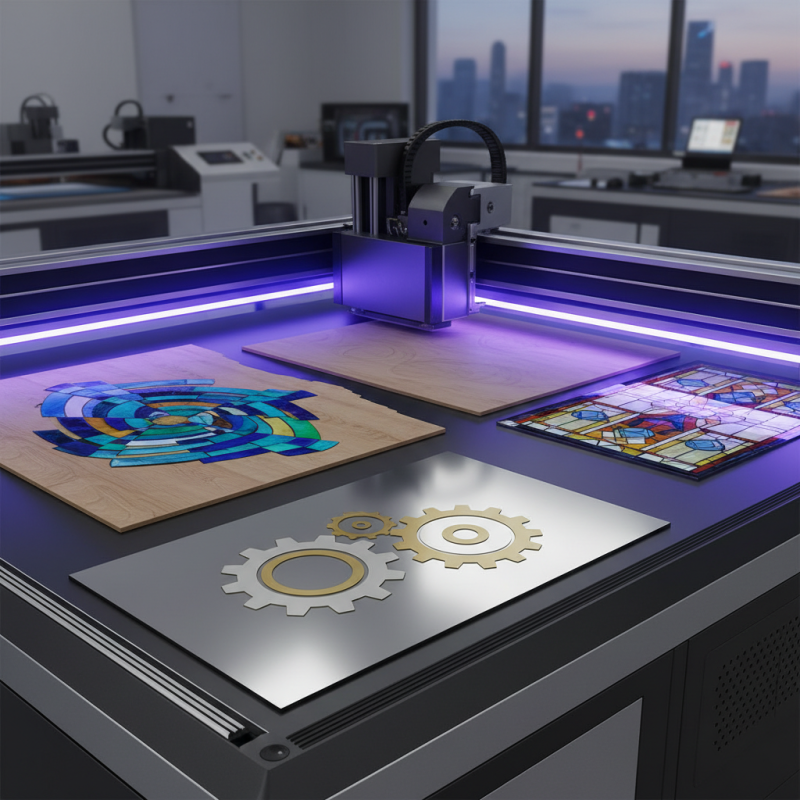
What is UVLED Flatbed Printing?
UVLED flatbed printing is a revolutionary technology that combines high-quality graphics with versatile applications. Unlike traditional printing methods, UVLED printing utilizes ultraviolet light to cure ink instantly. This process creates vivid colors and sharp images on a wide range of substrates, including wood, glass, and metal. A report from Smithers Pira indicates that the UV printing market is expected to grow at a CAGR of 9.4% by 2024. This growth highlights the increasing demand for innovative printing solutions.
This technology allows for direct printing on objects that were previously difficult to print on. The versatility of UVLED flatbed printers makes them ideal for creating customized designs and fulfilling niche market demands. However, working with UV inks requires careful handling. Improper exposure can lead to skin irritation or damage to equipment. Businesses should ensure that staff receive proper training on UV safety protocols and equipment handling.
Tip: Regular maintenance of the printing equipment can prevent costly downtimes. Schedule routine checks to ensure optimal performance. Keep the workspace well-ventilated to mitigate exposure to UV light.
UVLED printing is not without its challenges. The initial investment can be steep. Small businesses may struggle with the upfront costs of quality printers and inks. Evaluating long-term returns and market demand is essential for making informed decisions. Understanding target customers' needs can guide the types of products offered.
UVLED Flatbed Printing Output Comparison
This bar chart illustrates the print quality scores of various materials used in UVLED Flatbed Printing. Each material has been evaluated on a scale of 1 to 10 based on factors such as color accuracy, finish quality, and overall durability.
Key Components of UVLED Flatbed Printing Technology
UVLED flatbed printing is an innovative technology with key components that enhance its performance. At its core lies a UVLED light source, which cures the ink almost instantly. This means prints dry quickly, allowing for efficient production. The flatbed design permits printing on various materials, including wood, metal, and acrylic.
One crucial component is the print head. It precisely controls ink droplets, providing high-resolution imagery. The ink used is specially formulated to adhere firmly to surfaces. This chemical formulation ensures durability and vibrant colors. While the technology is impressive, achieving perfect prints can be challenging. Calibration and maintenance are essential to avoid misalignment or ink clogging.
Moreover, the software controlling the UVLED printer plays an important role. It translates designs into print-ready files. Users must familiarize themselves with the software to optimize settings for different materials. Though intuitive, there are often learning curves. Experimenting with settings can yield better results, but it requires patience and skill. The potential for mistakes is always there, but reflection on these can lead to improved techniques.
What is UVLED Flatbed Printing and How Does it Work? - Key Components of UVLED Flatbed Printing Technology
| Component | Description | Function | Material Compatibility |
| UV LED Light Source | A light-emitting diode that produces ultraviolet light used to cure inks. | Cures inks instantly for immediate handling. | Paper, Vinyl, Glass, Wood |
| Flatbed Printer | A printer with a flat surface where materials are placed for printing. | Enables printing on rigid substrates. | Wood, Metal, Acrylic, Foam |
| Inks | Special UV inks formulated to cure under UV light. | Adheres well to various surfaces and produces vibrant colors. | Plastic, Cardstock, Canvas |
| Control Software | Software used to manage printing process and create files. | Ensures accurate alignment and color management. | Compatible across different media types. |
| Vacuum Table | A flat surface that holds substrates in place during printing. | Prevents movement of materials for precision printing. | Supports a wide range of materials. |
How UVLED Flatbed Printing Works: The Printing Process
UVLED flatbed printing is a modern printing technique that utilizes UV light to cure ink instantly. The process begins with the flatbed printer positioning the substrate, which can be a variety of materials like wood, glass, or metal, on a flat surface. The printer head then moves across the substrate, depositing a layer of UV curable ink. As this ink is laid down, powerful UV lights activate the curing process, hardening the ink almost instantly.
When choosing a substrate, consider its texture and finish. A smooth surface often yields the best results. However, rough surfaces can lead to uneven ink layers, requiring extra attention. Experimenting with different materials also offers insights into how they react to UV exposure.
Care is crucial in the printing process. Clean your flatbed regularly to prevent ink build-up. A dirty printer head can lead to unsightly marks and inconsistencies in your print. Over time, you may notice variations in color or texture. Always test on a scrap piece first. This practice minimizes wasted materials and allows for adjustments to your design.
Maintaining the right environment for your printer is also essential. Temperature and humidity can affect the curing of UV inks. Monitoring these conditions can prevent unexpected results. If the ink isn't curing properly, it might smear or not adhere well. Taking the time to adjust your workspace will pay off in quality.
Advantages of UVLED Flatbed Printing Over Traditional Methods
UVLED flatbed printing is a modern technique that stands out in many ways. One major advantage is the ability to print on various surfaces. Wood, metal, glass, and plastic all become canvases. This versatility opens up new design opportunities, making creativity more accessible. The speed of UVLED printing also impresses. Jobs that once took hours can be completed in a fraction of the time.
Another key benefit is the Eco-friendly aspect. UVLED printing uses less energy compared to traditional methods. Additionally, it produces fewer volatile organic compounds. This makes it a safer option for both workers and the environment. The instantaneous curing of the ink reduces waste and mistakes, but it can be challenging for those adjusting to the technology. Training may be necessary to avoid issues, especially for those used to older methods.
Despite its advantages, some users may encounter a learning curve. The technology is still evolving, and understanding complex settings is essential. Errors can lead to subpar outputs. Choosing the right substrate can also be tricky. Some materials may not respond well to UVLED inks. As with any printing method, experimentation is key to mastering it.
Applications of UVLED Flatbed Printing in Various Industries
UVLED flatbed printing is transforming various industries. This technology uses ultraviolet light to cure or harden ink as it is printed. It enables high-quality prints on diverse materials, including wood, metal, acrylic, and glass. The versatility of flatbed printers allows for creative applications.
In the advertising sector, UVLED printing creates eye-catching signage and displays. The ability to print directly on surfaces means businesses can produce unique promotional materials. Additionally, the fashion industry benefits from custom textiles printed with intricate designs. This innovation allows designers to visualize their concepts quickly.
However, challenges remain. Not all designs translate perfectly from screen to print. Color accuracy can vary, causing frustration for creators. Environmental considerations are also vital. While UVLED printing reduces waste, the energy consumption during the curing process raises questions. Balancing efficiency with sustainability is essential for future developments in this technology.
